


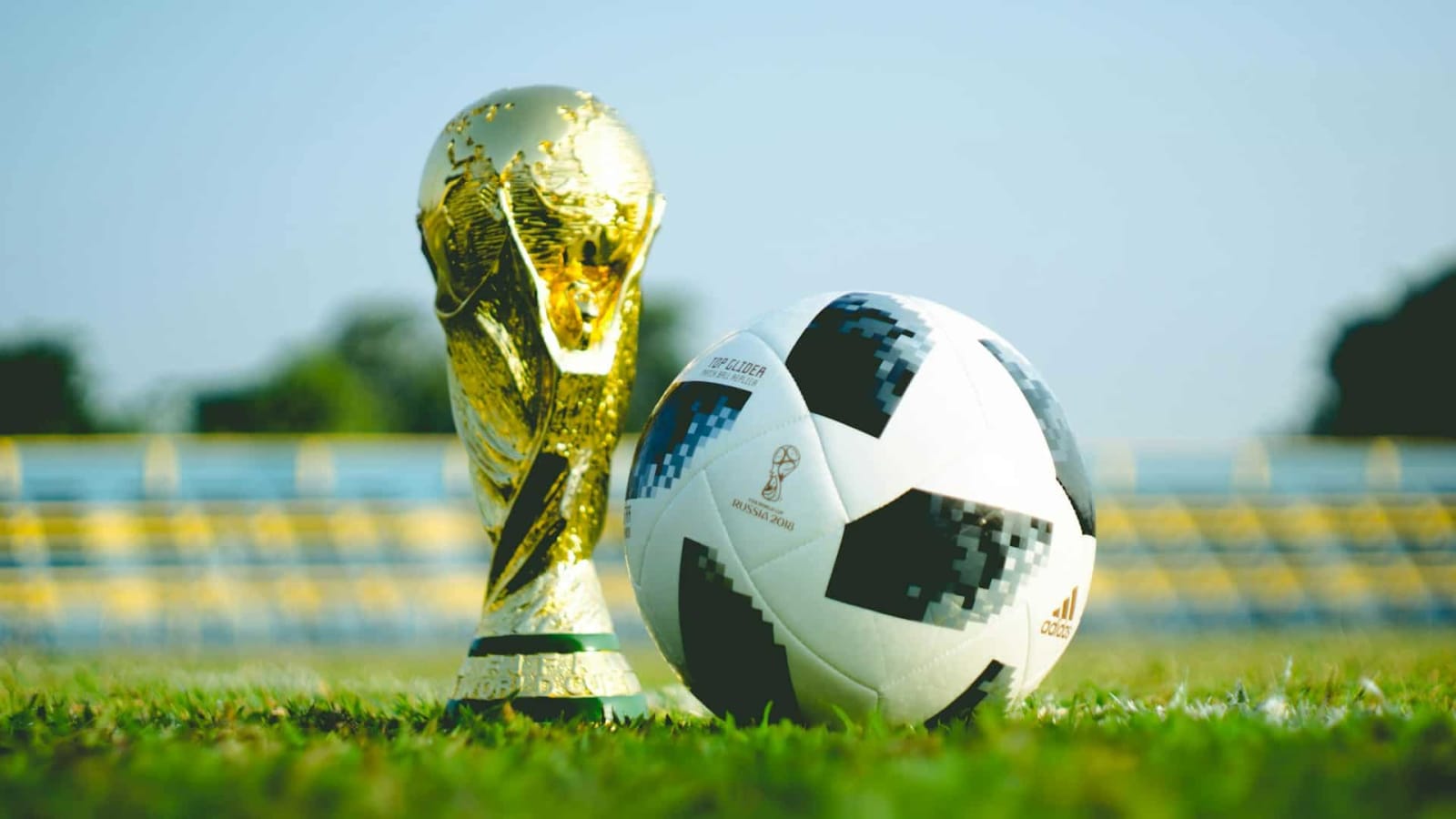
Messi and Spain set for historic final showdown
Argentina and Spain will meet in the 2026 World Cup final at MetLife Stadium in East Rutherford, with Lionel Messi chasing one last global crown and Spain aiming for a second title after 2010. Argentina are trying to become the first men’s team since Brazil in 1962 to win back-to-back World Cups, while Spain arrive unbeaten in 37 straight matches and have conceded just one goal across the tournament. The matchup also carries a generational twist: Messi, 39, faces Spain’s teenage star Lamine Yamal in a final that has been billed as a clash of football’s past and future.
The scale of the occasion is enormous, with more than 80,000 expected in the stadium and US President Donald Trump among the high-profile attendees. Several reports noted concerns around air quality from Canadian wildfires, but FIFA said it was monitoring conditions closely ahead of the 5am AEST kickoff on Monday. Spain coach Luis de la Fuente described the finalists as 'two super teams', and the numbers back that up: Spain have played seven matches with six clean sheets, while Argentina have repeatedly survived chaos, including late comebacks and knockout drama, to reach the title match again.
The final also resonates because it may be Messi’s last World Cup appearance, and Argentina have built their run around his goals, assists and leadership. Spain, by contrast, have leaned on collective control and defensive discipline, turning the tournament into a showcase for their methodical style. The contrast gives Sunday’s game a rare sense of uncertainty despite the pedigree on both sides, and it is why the final has become the defining fixture of the tournament rather than just its closing act.
Sources
- FIFA World Cup 2026: Argentina v Spain final preview, Lionel Messi v Lamine Yamal, do Argentina get favoured by FIFA?, half-time show controversy, talking points
- The World Cup final awaits, with Messi and defending champion...
- FIFA World Cup 2026: Spain, Argentina lock horns in a fascinating finale
- Spain vs. Argentina World Cup final has everything: Lionel Messi, Lamine Yamal and 2 super teams chasing history
Wenger signals rethink on World Cup hydration breaks
Arsène Wenger has admitted FIFA still has work to do on the hydration breaks introduced at the 2026 World Cup, saying the governing body will analyse the impact before deciding whether to keep them in the same form. The three-minute pauses, used midway through each half in every match regardless of weather or roof conditions, were designed around player welfare but quickly became one of the tournament’s most debated innovations. Wenger said the breaks did not appear to alter results, yet he acknowledged that 'sometimes people didn’t like it' and that FIFA must review the policy after the tournament.
The issue has also become a commercial one. Broadcast partners viewed the stoppages as valuable ad inventory, with Fox expected to make at least $250 million from hydration-break advertising alone, according to The Hollywood Reporter. That tension — between welfare, flow of play and revenue — explains why the policy has drawn backlash from fans and some within the game. FIFA’s review will matter beyond this World Cup because any decision could shape future media-rights negotiations and the rhythm of elite matches worldwide.
Wenger’s comments suggest FIFA is not treating the breaks as a settled reform, even though they were one of the tournament’s most visible rule changes. The fact that they were mandated in cool conditions and under closed roofs made them especially controversial, with critics arguing they were unnecessary and commercial in nature. Whatever FIFA decides after the final, the debate has already shown how a small in-game intervention can become a major talking point when introduced on the sport’s biggest stage.
Messi’s record chase defines the final build-up
Lionel Messi’s World Cup campaign has continued to reshape the tournament record book, with multiple reports noting that the Argentina captain has become the first player to appear in six World Cups and has reached 21 goals at the competition. He also produced a standout knockout performance against England, completing nine dribbles and providing two assists in a single World Cup knockout match — a feat described as unprecedented in records dating back to 1966. For Argentina, Messi’s numbers are not just decorative; they are central to why the team has reached another final and why Sunday feels like a potential career-defining farewell.
The significance is broader than nostalgia. Messi’s return to MetLife Stadium carries heavy symbolism because the venue is also where he announced his international retirement in 2016 after Argentina’s Copa América final loss. Nearly a decade later, he is back there chasing a second straight World Cup winners’ medal and, in the words of one report, a chance to 'complete the game' after lifting the trophy in Qatar in 2022. That framing captures how his legacy has shifted: from a player burdened by unfinished business to one who has already secured the greatest prize and is now adding layers to it.
Several articles also underlined how deeply Messi’s presence shapes the final itself. Spain’s challenge is not merely tactical but historical, because the match is being sold as Messi’s last run on the international stage and possibly the last chapter of an era. His scoring and playmaking have made him the competition’s most consequential individual, while his leadership has kept Argentina alive through a series of knockout escapes. In that sense, the final is as much about the closing of a legend’s World Cup story as it is about deciding a champion.
Mbappé’s scoring surge powers Golden Boot race
Kylian Mbappé’s World Cup has remained a headline in its own right, with the France forward scoring in the third-place match against England and sitting level with Lionel Messi on eight goals in the tournament. That leaves the Golden Boot race alive even as France try to finish on a high in Miami Gardens. Mbappé started the bronze-medal game as France and England met after their semifinal defeats, and his presence alone kept the individual scoring storyline attached to the tournament’s final weekend. The match also reminded observers that even in a consolation fixture, the World Cup can still produce significant individual stakes.
One article went further, noting that Mbappé’s 22nd World Cup goal broke Messi’s all-time record for the competition, making him the tournament’s leading scorer in history. The French star reached that mark in just 22 appearances, an extraordinary rate that underlines how quickly he has translated elite-level consistency into all-time status. That record matters because it changes the benchmark for future stars: Messi’s long-standing mark has fallen, and Mbappé now owns a milestone that will define the next era of World Cup scoring debate.
Beyond the pitch, the article also highlighted the commercial aftershocks of Mbappé’s success, especially in crypto-linked meme tokens and NFT markets tied to his performances. He has been involved with Sorare since 2022 as both ambassador and equity investor, which gives his World Cup profile extra resonance in digital markets. But the football story remains the core one: a 26-year-old forward is not only chasing a tournament award but also rewriting the competition’s historical scoring hierarchy.
Argentina’s win sparks Falklands banner backlash
Argentina’s semifinal victory over England has triggered a political row after players displayed a banner reading 'Las Malvinas son Argentinas' during celebrations. The slogan, referring to the Falkland Islands dispute, immediately drew attention far beyond football and prompted reports that FIFA is considering a disciplinary investigation. The banner appeared moments after Argentina’s dramatic 2-1 comeback win, a result that sent Lionel Messi’s side into the World Cup final against Spain and shifted the conversation from sporting achievement to diplomatic sensitivity. The episode has become one of the tournament’s most combustible off-field incidents.
The controversy has also invited reactions from the United States and the United Kingdom, illustrating how quickly World Cup symbolism can spill into international politics. Argentina’s celebrations were already under scrutiny because their knockout run has been accompanied by accusations from some rivals of preferential treatment and referee bias. The banner, however, gave the debate a much sharper edge by invoking a long-running sovereignty dispute that remains emotionally charged in both countries. FIFA now faces the familiar problem of deciding how aggressively to police political messaging at its own showcase event.
For Argentina, the timing is awkward because the team’s football story has been compelling enough on its own. They are one win from a second straight World Cup title, yet the image most likely to endure from the semifinal may be the banner rather than the late goals that beat England. That is significant because it shows how, at the World Cup, victory can be instantly reframed by symbolism — especially when national identity and historical grievance are involved.
Spain’s grass-first model stands out amid turf debate
As the World Cup reaches its final weekend, the Las Vegas Review-Journal used the tournament’s turf debates to spotlight the Raiders’ long-standing commitment to natural grass at Allegiant Stadium. Mark Davis said grass was 'number one' when planning the venue and insisted he would never build a stadium to play on artificial turf, citing safety and the traditional feel of football. His approach led to a movable field tray that weighs 19 million pounds and allows the natural grass surface to sit outside the stadium for sunlight before moving back inside on game days. The story lands amid renewed questions over why NFL venues can switch surfaces for soccer but not always for American football.
The comparison matters because Allegiant Stadium has already hosted major soccer events, and the article framed Davis’s decision as a rare case where a billionaire owner invested heavily in a grass solution from the outset. That contrasts with the broader World Cup turf wars, where temporary natural surfaces are often installed only for marquee matches. Davis’ comments also touch on player safety, a concern that has been central to debates around field quality across the tournament cycle. In practical terms, the Raiders’ setup shows that grass is possible, but only with significant engineering and money.
The article’s significance lies less in World Cup action than in the tournament’s legacy for venue standards. By the time the final is played, the conversation around pitch quality has become one of the event’s persistent themes, and Allegiant Stadium offers a concrete example of how a team can prioritise grass from the start. That makes the piece relevant to future tournament planning and to the continuing argument over whether elite football should be played on natural surfaces whenever possible.