


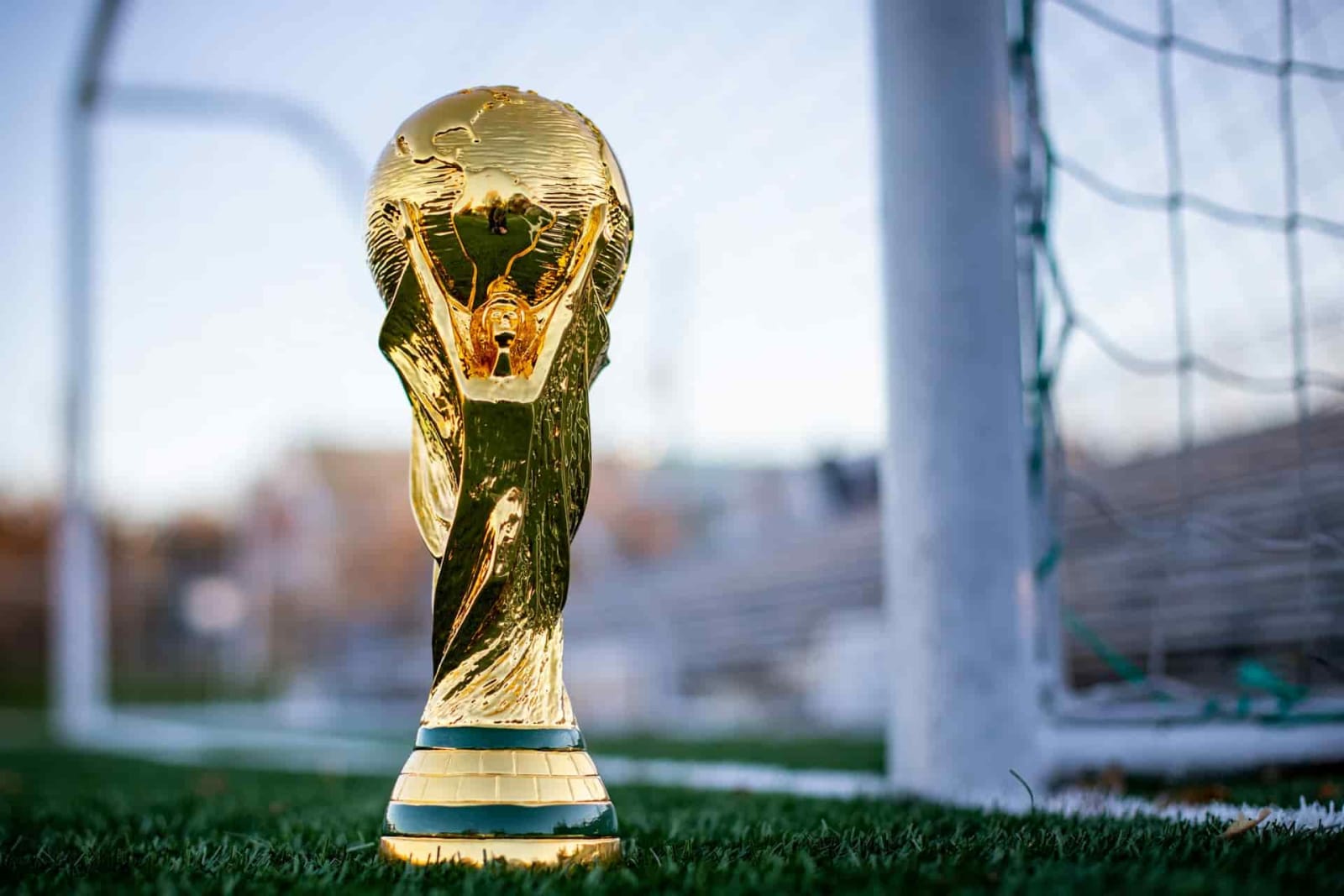
Spain's final win caps record-breaking World Cup
Spain's extra-time victory over Argentina in the 2026 World Cup final remains the defining story of the day, with the defending European champions sealing a 1-0 win at MetLife Stadium in East Rutherford, New Jersey. The match was played before a sellout crowd of 80,663 and delivered the tournament's biggest stage moment, ending Argentina's bid to retain the crown they won in Qatar four years earlier. The result also gave Spain a second global title and confirmed their status as the tournament's dominant side after weeks of strong performances.
The scale of the final underlined how far this World Cup reached beyond the pitch. Final U.S. television figures put combined audience totals at 66.4 million across Fox and Telemundo, while other reports estimated 35 million on FOX and 22 million on Spanish-language services in the United States. One article said the worldwide audience could have reached 1.8 billion, making it one of the most watched sporting events ever. Spain's win is already shaping the post-tournament narrative, from national pride to global commercial impact, and it sets the benchmark for future World Cups in North America.
Lamine Yamal's rise fuels Spain and global acclaim
Lamine Yamal emerged from Spain's World Cup triumph as one of the tournament's central figures and, according to Transfermarkt's latest valuation, the world's most valuable footballer. The Barcelona teenager now shares a €220 million market value with Manchester City's Erling Haaland after helping Spain win the title in the United States, Canada and Mexico. Another report from Spain's coach, Luis de la Fuente, praised the 19-year-old for having 'matured a great deal' and for putting the team's needs ahead of individual glory during the campaign.
De la Fuente said Yamal 'has done a wonderful job' after coming into the tournament following a period of inactivity and still producing a decisive impact. He scored one goal at the World Cup, but his influence went well beyond goals, with his pace, creativity and composure repeatedly unsettling opponents. The attention around Yamal now extends beyond footballing praise: a separate report from OBERAXE said he became a prominent target of racist and Islamophobic abuse online during the tournament, showing how his rise has made him both a sporting symbol and a flashpoint in wider identity debates.
出典
- 'Matured a great deal' - Lamine Yamal did a 'wonderful job' for Spain at 2026 World Cup, insists Luis de la Fuente
- Yamal emerges world's most valuable footballer after FIFA World Cup 2026 - Blueprint Newspapers Limited
- 2026 World Cup fuels online racism, Islamophobia targeting Lamine Yamal
- 2026 World Cup fuels online racism, Islamophobia targeting Lamine Yamal
Trump-Balogun controversy sparks FIFA ethics backlash
One of the tournament's most explosive off-field episodes continues to reverberate after U.S. President Donald Trump intervened in Folarin Balogun's red-card case. According to reports, Balogun's automatic one-match ban for a tackle against Bosnia and Herzegovina was postponed after Trump called FIFA president Gianni Infantino, allowing the United States forward to face Belgium with a quarterfinal place at stake. Belgium then beat the U.S. 4-1 in a chaotic match that followed 36 hours of controversy and intensified scrutiny of how discipline was handled.
Norway's football federation said its board would consider filing a formal complaint to FIFA ethics investigators, with president Lise Klaveness saying the governing body needed to acknowledge the decision was a mistake. The episode has become a symbol of the wider criticism aimed at FIFA during the tournament, including accusations of political interference and inconsistent governance. With the World Cup now over, the Balogun case is likely to remain one of the most damaging governance stories of the summer because it mixed sporting fairness, presidential intervention and a high-stakes knockout match.
Tyler Adams leads push to turn World Cup buzz into access
United States midfielder Tyler Adams is trying to convert the emotional surge from the home World Cup into something more durable for American soccer. In interviews tied to an Allstate and U.S. Soccer Foundation mini-pitch opening in Sandtown Park in South Fulton, Georgia, Adams said he hopes the support the national team received during the tournament will continue beyond the event itself. He described the initiative as part of a three-year project that gives children a place to play and develop, and he framed it as a practical way to keep the sport growing after the tournament's end.
The message matters because the U.S. men's team exited in the round of 16, yet the tournament still produced one of the strongest fan responses in recent memory. Adams said fans had made the players feel relatable and had shown that they represented the country with passion every time they wore the shirt. The mini-pitch project, and Adams' public advocacy for it, point to the next challenge for U.S. Soccer: not simply celebrating a successful hosting cycle, but making sure the World Cup produces more players, more community spaces and a more permanent fan base.
Houston launches free-ticket drive to keep soccer momentum
Houston's World Cup hosts are trying to convert June and July's festival atmosphere into lasting support for local clubs. The Houston Dynamo and Houston Dash announced a partnership with Mayor John Whitmire to give away free tickets at Shell Energy Stadium to 10,000 first-time attendees. The promotion covers six Dynamo matches and six Dash matches, begins July 25 and runs through Sept. 26. Whitmire said every child deserves a chance to fall in love with the game, while the clubs hope that families who discovered soccer during the World Cup will now come back for MLS and NWSL action.
The need for such a campaign is clear from the crowd data. Houston hosted seven 2026 FIFA World Cup matches and a daily FIFA Fan Festival, but the Dynamo's first post-break MLS home game drew 17,137 for a 1-1 draw with D.C. United, far short of the full-house atmosphere seen during the tournament. Club president Jessica O'Neill said weeknight summer games have always been difficult and that the turnout was still the team's best Wednesday crowd in four years. The initiative is a test of whether World Cup enthusiasm can be translated into repeat attendance once the global spotlight has moved on.
Spain's title triggers racism alarm in online spaces
Spain's World Cup triumph has been followed by a troubling surge in racist and Islamophobic abuse online, according to a bulletin from the Spanish Observatory on Racism and Xenophobia. OBERAXE detected 40,861 pieces of hate-related content in June, with sport accounting for 16% of the monitored material and ranking as the second-biggest trigger after public insecurity. The report said discriminatory narratives were especially prominent around the World Cup, with national teams, supporters and players all targeted in the online flood.
Lamine Yamal was singled out as one of the main targets because of his background and identity, making him an unwilling symbol of the tensions exposed by the tournament. The findings show that World Cup success can carry a darker afterlife, especially when young stars become public faces of national pride. The report also suggests that football's visibility makes it a powerful amplifier of both celebration and prejudice, forcing Spain to confront how quickly sporting triumph can be overshadowed by abuse directed at players who helped deliver it.
World Cup ratings boom reshapes U.S. soccer outlook
The 2026 World Cup did not just crown Spain champions; it delivered television numbers that reset expectations for soccer in the United States. Final Nielsen figures put the Spain-Argentina final at 66.4 million combined viewers across Fox and Telemundo, making it the most-watched soccer match in U.S. television history. One report said Fox averaged 7.74 million viewers across the tournament, up 116% from 2022, while Telemundo and Peacock averaged 6.3 million, a 143% jump. Another local breakdown showed Boston and Providence among the top domestic markets, with Boston posting a 3.91 rating and Providence a 3.35.
The ratings matter because they suggest the tournament reached well beyond the traditional soccer audience. Boston and Providence beating several bigger markets, including Seattle and Los Angeles, points to a wider geographic spread of interest that MLS, US Soccer and local clubs will want to capture. The final also drew an estimated 1.8 billion worldwide viewers in one report, reinforcing the event's commercial scale. For broadcasters and clubs alike, the challenge now is to turn a one-off global surge into sustained engagement once the World Cup spotlight fades.
Fans, federations and the World Cup's next chapter
With the tournament over, several reports focused on what the 2026 World Cup means for football's future rather than its immediate results. Patrice Motsepe argued that Africa's World Cup story is still incomplete without Nigeria and Cameroon, while also confirming that CAF's 48th Ordinary General Assembly will be held in Abuja on November 21. Elsewhere, analysts and opinion writers said the expanded 48-team format, hydration breaks and ticketing changes have left a mixed legacy, with some praising inclusion and others criticising FIFA's commercial priorities. Together, those stories show the tournament is already being assessed as a turning point in how the sport is governed and marketed.
There is also a clear development angle emerging from the aftermath. U.S. Soccer is using the Arthur M. Blank National Training Center to talk about long-term structural reform, while India and Canada are both being framed as countries that could turn World Cup interest into domestic growth. In India, the Super League is due to start on 4 September, with club chiefs hoping the tournament's huge audience will spill over into the league. The common thread is that the World Cup's legacy will not be measured only by Spain's title, but by whether host nations and absent nations alike can convert attention into progress.
出典
- CAF President Motsepe: World Cup Feels Incomplete Without Nigeria, Cameroon - Ben Television | Breaking - Nigeria, Africa and World Top News.
- Nigeria To Host CAF General Assembly In November
- Grading FIFA's changes to the World Cup, from expansion to hydration breaks
- 'An American plan' - How U.S. Soccer plans to ride the World Cup wave to change development, education and pay-for-play
- Everyone is hooked on football': Indian league seeks to ride World Cup wave