


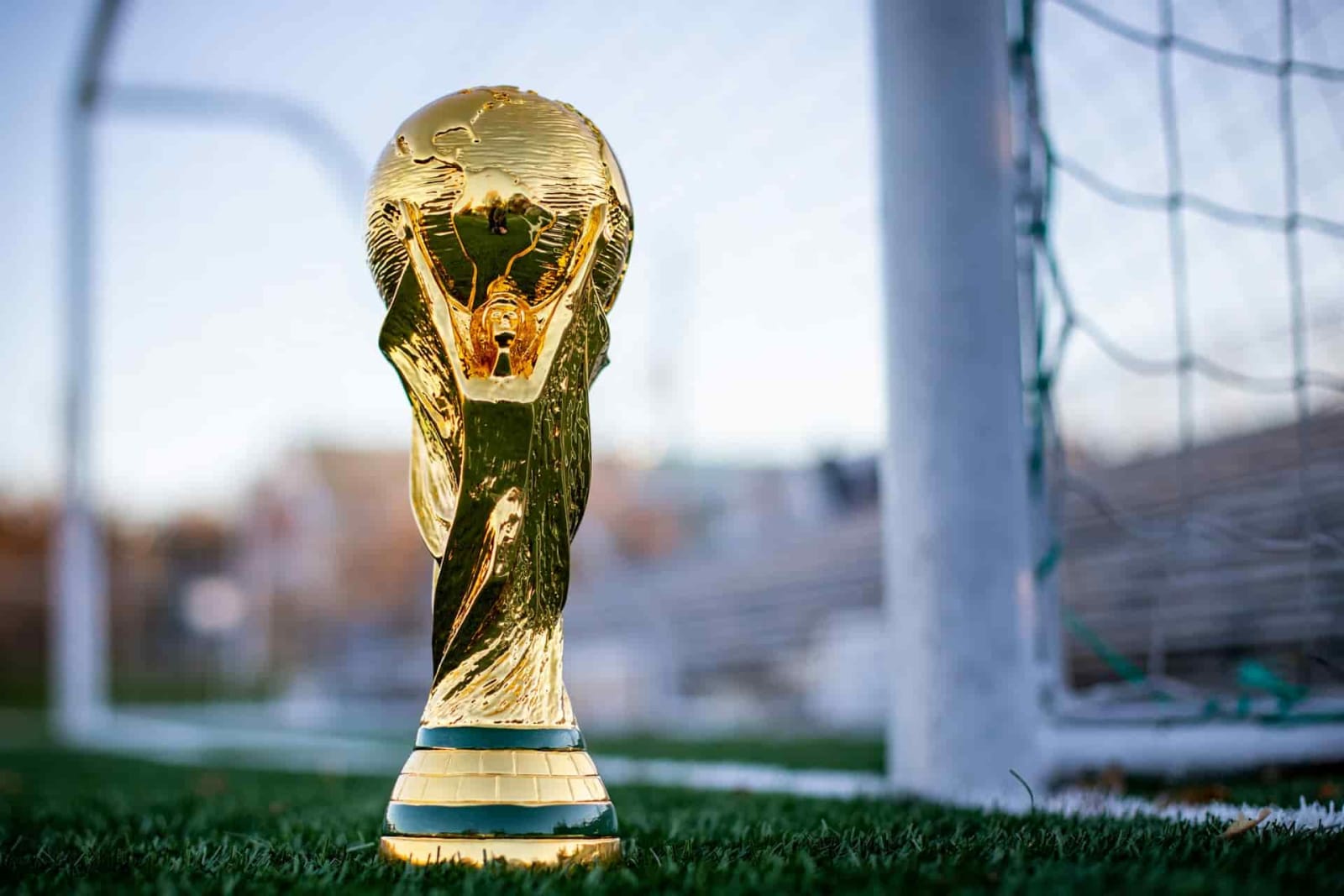
Messi rescues Argentina in epic comeback over Egypt
Argentina produced one of the defining matches of the 2026 World Cup in Atlanta, overturning a 2-0 deficit to beat Egypt 3-2 and reach the quarter-finals. Egypt had led through Yasser Ibrahim and Mostafa Ziko, and a VAR decision also wiped out a possible third goal that would have put the upset beyond doubt. Argentina were staring at elimination with 11 minutes left, but Cristian Romero pulled one back, Lionel Messi levelled in the 83rd minute and Enzo Fernandez headed the stoppage-time winner. The result keeps the defending champions alive in their bid to become the first side since Brazil in 1962 to win back-to-back World Cups.
The comeback carried huge historical weight because Fernandez's winner was also the 3,000th goal in men's World Cup history, according to reporting from the match. Messi, now on eight goals in this tournament and 21 in World Cup history, was in tears at the final whistle, underlining how close this was to being the end of his final World Cup run. Argentina will face Switzerland or Colombia in Kansas City on Saturday, while Egypt leave with their first-ever knockout-stage appearance still a breakthrough despite the collapse. The late turnaround also ensured Lionel Scaloni's team remained in the tournament's centre of gravity, where every Messi moment now feels like a potential chapter in football history.
来源
- Enzo Fernandez scores the 3,000th goal in men's World Cup history and it fires Argentina to the quarter-finals
- Lionel Messi leads Argentina to 3-2 comeback victory over Egypt and spot in World Cup quarterfinals
- World Cup: Head coach Scaloni cries after Argentina survive Egypt scare
- Lionel Messi leads Argentina to 3-2 comeback victory over Egypt and spot in World Cup quarterfinals
Egypt fury erupts over VAR and Messi controversy
Egypt's exit became a flashpoint for officiating complaints after coach Hossam Hassan accused FIFA of favouring Argentina and keeping Lionel Messi in the tournament. He said his side were better 'in everything' and claimed the match was influenced by 'internal factors on the pitch and external factors off it', pointing to a VAR-disallowed goal for Mostafa Ziko and what Egypt believed was a foul on Alexis Mac Allister before Enzo Fernandez's winner. The late defeat was especially bitter because Egypt had led 2-0 and were only minutes from one of the biggest shocks of the tournament before Argentina's surge changed everything.
The allegations spread beyond footballing frustration because Hassan's comments turned the result into a broader argument about credibility, power and perception at the World Cup. Reports also described a heated post-match scene near referee Francois Letexier, with Egypt staff remonstrating after the stoppage-time goal and a red card shown to a member of the bench. Hassan's criticism may draw disciplinary scrutiny, but it also reflects how narrow margins and VAR decisions can dominate the narrative when an underdog is beaten late by a global heavyweight. Egypt's players still earned praise at home for reaching the knockout stage for the first time in their World Cup history.
来源
- FIFA wants Messi to stay in the running: Egypt coach after VAR controversy
- 'They wanted Messi to remain': Egypt coach alleges unfair treatment after World Cup exit
- Egypt coach livid after World Cup loss to Argentina: 'We have suffered injustice'
- Egypt claim FIFA 'wanted Messi to stay in the tournament' after defeat
Ronaldo's final World Cup ends in Spain defeat
Cristiano Ronaldo's World Cup career ended in tears as Portugal were beaten 1-0 by Spain in the round of 16, a result that removed one of the sport's defining figures from the tournament. Reports described the loss as the end of Portugal's hoped-for golden generation, with Bruno Fernandes, Joao Neves, Vitinha and Nuno Mendes unable to produce the cohesion needed to support their captain. For Ronaldo, the match confirmed that six World Cup appearances had still not delivered the one trophy missing from an otherwise extraordinary career, and the image of him leaving the field in North America will linger as one of the tournament's emotional pivots.
The result also sharpened the contrast with Lionel Messi, whose late heroics for Argentina kept his own campaign alive on the same day. That comparison has become central to World Cup discourse because both men are the only players in men's football history to appear in six editions of the tournament. Ronaldo, now 41, said it was his final World Cup, closing a chapter that stretched from Germany 2006 to 2026. Spain's win, meanwhile, pushed them into the quarter-finals and reinforced the sense that this tournament is moving into a new era even as one of its greatest stars exits the stage.
United States crash out as Belgium expose the gap
The United States men's team suffered a crushing 4-1 defeat to Belgium in Seattle, ending their World Cup run in the round of 16 and exposing how far they remain from the game's elite. Belgium took control through Charles De Ketelaere, who scored twice in the first half, before Hans Vanaken added his first World Cup goal and Romelu Lukaku finished the job in stoppage time. The result was brutal on the field and historic off it: Fox's telecast drew 30 million viewers, making it the most-watched soccer broadcast in American history, with a peak audience of 36.8 million. Even in defeat, the scale of the audience showed how much the tournament has captured the country.
The loss revived familiar questions about whether years of investment have translated into genuine progress. Christian Pulisic said the U.S. still has 'that next step to come', while Mauricio Pochettino argued improvement is not linear, but the round-of-16 exit again matched the same ceiling reached in 1994, 2010, 2014 and 2022. The match also fed a betting boom, with American sportsbooks reporting record soccer handle on the game and saying it outperformed several major championship events. For the hosts, the World Cup has been both a cultural success and a sporting reminder that popularity does not automatically equal elite performance.
来源
- FIFA World Cup 2026: US-Belgium clash draws 30 million viewers, becomes most-watched soccer telecast in US history
- USA's World Cup loss was most-watched soccer game in American history
- U.S. loss sets betting records; big profits for house
- Same old story: U.S. men's soccer team fails to take major step forward at World Cup
- Same old story: American soccer team stagnant for quarter century
Mbappé row escalates after UN condemns racist remarks
Kylian Mbappé's World Cup story moved beyond football after Paraguay senator Celeste Amarilla made comments that the United Nations Human Rights Office condemned as 'dehumanising' and racist. The row began after France beat Paraguay 1-0 in the round of 16, with Mbappé scoring the decisive penalty, and Amarilla then posted remarks on social media targeting the France captain's identity and background. The backlash quickly spread across governments, football authorities and human rights groups, turning a post-match outburst into a global controversy about racism in sport. Mbappé responded by calling Amarilla 'a despicable woman' and insisting she did not represent the Paraguayan people.
The significance goes beyond a single player because the UN's intervention shows how modern World Cup stardom can amplify discriminatory language far outside the stadium. Mbappé's role in France's narrow victory made him the focal point of both celebration and abuse, while the official condemnation placed pressure on public figures to moderate their language in the aftermath of emotional exits. France's progression keeps them in the title race, but the headlines around this match now include a human-rights dimension that the tournament's organisers will not want to ignore. It is another reminder that World Cup drama increasingly lives on social media as much as on the pitch.
Haiti celebrate World Cup pride under heavy security
Haiti's players returned to Port-au-Prince under heavy security for a celebration tour after their World Cup campaign, giving supporters a rare moment of joy amid deepening poverty and gang violence. The Grenadiers lost all their group matches, but they still managed to score twice against Morocco in a 4-2 defeat in their final game, a small but meaningful highlight for a nation that qualified for the tournament last November. Duckens Nazon, Martin Expérience and Josué Duverger were escorted through the capital and into the National Pantheon Museum, where the symbolism mattered as much as the football. For Haiti, simply competing on the world stage became a point of national pride.
The tour underlined how World Cup participation can matter far beyond results, especially for a country seeking moments of unity. Nazon said, 'We continue to fight for all Haitians,' and that message resonated because the team's qualification itself was historic. Even without a win, Haiti's presence in North America created a rare positive narrative for a country usually discussed through crisis, and the players' reception suggested the tournament had given fans a brief respite. The celebration also showed how football can function as a public act of hope, with the national team carrying emotional weight well after elimination.